The vehicle
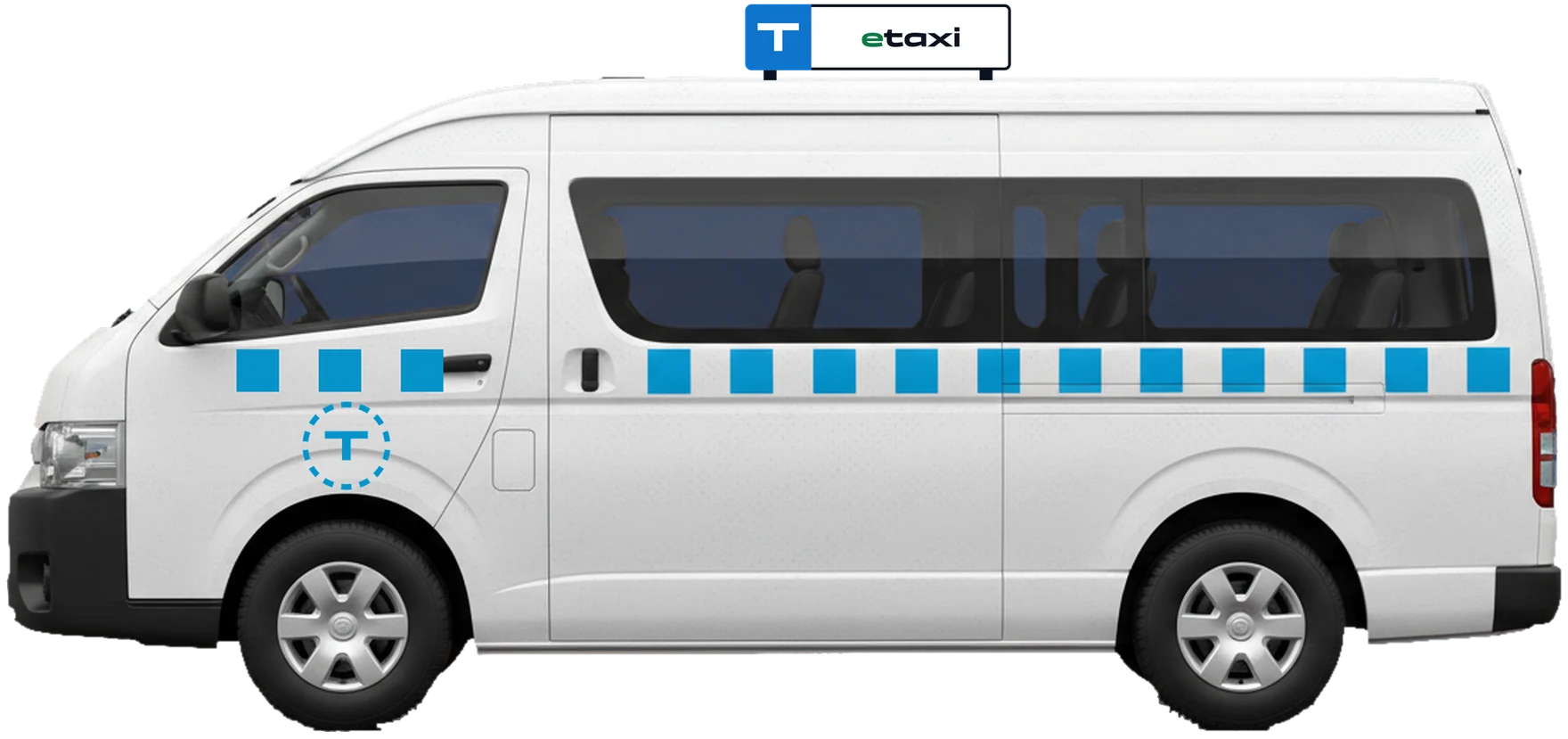
An electric van in the 14-seat class, in the blue and white Kampala already reads as a taxi. Charged at a depot, mostly off-peak.
Concept proposal, October 2026
eTaxi proposes electric 14-seater taxis that are privately financed and operated, publicly regulated, and tracked live on the rider's phone. This page is the short version. The two documents below carry the detail and every source.
This is a concept. No eTaxis are running, no company has been registered and no money has been raised. Nothing here is an offer, and none of the organisations named have endorsed it. Figures marked indicative come from a published model with stated assumptions.
On 24 August 2026 the Ministry of Works and Transport and the traffic police began Operation Ganyegenya, a 100-day crackdown on commuter taxis in dangerous mechanical condition across Greater Kampala.1
By 15 October, 423 of the 531 taxis tested at the government centres in Namanve and Kawanda had failed, four in every five.9 The test is the vehicle's condition, not its age. No age cap and no ban on 14-seaters was announced.2 But the fleet is old, and on the second day a taxi leader estimated that about three quarters of taxis were off the road. Some fares doubled.3
The crackdown removes unsafe vans. It does not replace them. No financing for owners to renew their vehicles was found in any 2026 report. eTaxi is a proposal for that missing half: a way for an owner with a condemned van to get back on the road in a clean one.
An electric van in the 14-seat class, in the blue and white Kampala already reads as a taxi. Charged at a depot, mostly off-peak.
The same stages and routes. The fare shown before boarding, paid by mobile money. A Masaawo button for your stop. Cameras and a trip link you can send home.
Private money and private operators under public rules. Taxi owners and their associations can lease to own, or hold shares in the operating company, as Cape Town did with its taxi licence holders.5
Every trip, stop, fare and battery cycle is recorded with consent and protected by law. That record runs the fleet today and trains the systems of tomorrow.
An energy comparison for one taxi on city routes, base case. Indicative
Energy only. Vehicle price, maintenance, wages and chargers are not in these figures, and no published price was found for a suitable van. Fuel use is driver-reported, daily distance is derived, and both will be measured in the pilot. Electricity at Shs562.1 per kWh for October to December 2026.4 Over eight years the base-case saving is worth about USD 27,900 at Uganda's average shilling lending rate, or USD 41,000 at the foreign-currency rate. The method and every input are in Appendix A of the proposal.
An instrumented fleet is also a measuring instrument for the city. African roads are thin in the public datasets that driving systems learn from.7
Location is personal data under Uganda's Data Protection and Privacy Act 2019.8 The proposal sets out consent, retention, anonymisation and sharing terms. Kampala already has one open route feed for 14-seater taxis to build on.6
One corridor, the first year. Measure real distance, energy, fares and demand.
Years two to three. Owners join by lease or shares. Depots and charging follow the routes.
Years four to six. A franchise framework with the regulator, and data services for the city.
Fleet sizes are proposed planning targets, not forecasts. Each phase has a gate: the next one starts only if the last one met its measures.
The proposal cites its full source list. Indicative figures come from scripts/model.py in the project repository.